
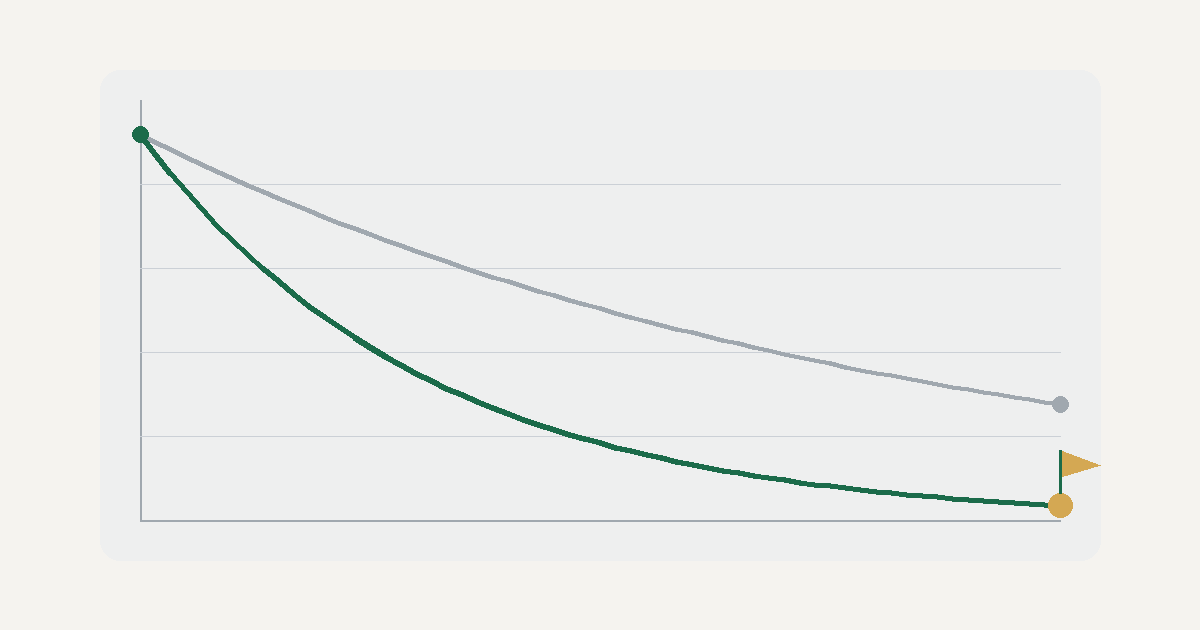
Once a loan is on your calendar, the next smart question is how to clear it with as little interest as possible. Paying off faster is not about heroic sacrifices every week. It is about a few repeatable habits that shrink principal sooner so interest has less time to accrue.
This guide covers seven practical strategies: biweekly timing, rounding up, windfalls, trimming a subscription, principal-focused extras, avoiding unnecessary fees, and using early payoff when your agreement allows it. Little Lake Lending shares these ideas for borrowers who want to understand how repayment choices affect total cost—not only the minimum due.
Always check your loan agreement before you change how you pay. Application of extra payments, due dates, and prepayment rules are controlled by that contract. For Little Lake Lending policy details on early payoff and pricing, see Rates & Terms.
1. Switch to a Biweekly Rhythm (When It Fits Your Paycheck)
If you are paid every two weeks, aligning loan payments with payday can make acceleration feel natural. Some borrowers schedule a payment every paycheck instead of one larger monthly payment. Over a year, a true biweekly pattern on what was a monthly loan can result in the equivalent of an extra monthly payment—because there are 26 biweekly periods, which equals 13 “monthly-sized” amounts.
That trick only works if your agreement and payment system support it, and if each payment posts correctly. Do not assume that splitting a monthly payment in half twice a month automatically creates an extra payment; the amounts and timing have to add up that way.
If your loan is already on a biweekly schedule, you can still accelerate by adding a small extra to each payment or by making one additional payment when you can. The principle is the same: more frequent principal reduction means less time for interest to build.
Set reminders or autopay carefully. Paying early is helpful; paying in a way that causes overdrafts is not. Confirm your bank balance a day or two before each transfer.
2. Round Up Every Payment
Rounding up is one of the simplest acceleration tactics. If your scheduled payment is $87, consider sending $90 or $100. If it is $145, try $150. The difference is small enough that many budgets absorb it, yet over several months those extras chip away at principal.
Tell your lender you want extras applied to principal when that option exists, and keep confirmation (screenshots, emails, or statements). Misapplied extras that sit as “paid ahead” without reducing principal may not save interest the way you expect.
Pair rounding up with a written target: “I will round up for the next eight payments, then reassess.” Temporary challenges are easier to stick with than vague forever-plans. If a tight month arrives, return to the minimum rather than missing a payment—staying current always comes first.
3. Put Windfalls to Work on Principal
Tax refunds, overtime, bonuses, gift money, and side-gig deposits are powerful payoff tools because they do not require cutting your everyday budget. Decide in advance what percentage of each windfall goes to the loan. A common approach is to split: part to principal, part to a small emergency buffer so you do not need to reborrow after the next surprise.
When you send a windfall payment, label it clearly if your payment portal allows notes, and verify on the next statement that principal dropped. Large one-time payments can shorten the remaining term significantly on short-term installment loans, which is where interest savings show up fastest.
Resist the urge to treat every windfall as lifestyle money first. Enjoy a defined portion if that keeps you motivated—but let the loan see a meaningful share while the balance is still outstanding.
4. Cut One Subscription and Route It to the Loan
You do not need a full austerity makeover. Cancel or downgrade one recurring charge you barely use—an extra streaming service, unused software, a premium plan you can live without—and immediately add that dollar amount to your loan payment.
Why one subscription? Because the savings are automatic and monthly, which matches loan schedules. A $12 or $15 cut becomes a built-in extra payment without relying on leftover cash that might not appear.
After 60–90 days, if the change feels easy, consider a second trim. Redirecting lifestyle leaks into principal is one of the lowest-drama ways to finish a loan early. Just avoid cutting expenses that would create new problems—such as canceling a tool you need for work.
5. Make Principal-Only Extra Payments (Confirm How They Apply)
Minimum payments typically cover accrued interest first, then principal. Extra payments save the most when they reduce principal promptly. Ask your lender:
- How do I designate an extra payment toward principal?
- If I pay more than the amount due, does the surplus reduce principal or advance my due date without reducing interest as much?
- Is there a specific phone number, portal button, or form for principal-only payments?
Get the answer in writing when you can. Then make extras on a schedule you can sustain—perhaps $20 each payday—rather than waiting for a perfect month that never comes.
Keep paying the required installment on time even when you send extras. Falling behind to “catch up later” usually costs more in fees than the interest you hoped to save.
6. Avoid Fees That Quietly Extend Your Cost
Interest is not the only cost of a loan. Late fees and returned-payment fees add dollars without reducing principal. Bank overdraft fees from a failed autopay can stack on top. Avoiding those charges is a payoff strategy because every fee you do not pay is money you can send to principal instead.
Practical habits:
- Keep a small buffer in checking so autopay does not bounce.
- Turn on due-date reminders a few days early.
- Update account information before you close or switch banks.
- If a payment will be late, contact the lender before the due date and ask what options exist.
A single avoided fee can equal weeks of rounding-up progress. Reliability is underrated as an interest-saving tool.
7. Use No-Penalty Early Payoff When Available
Some loans charge a prepayment penalty for paying ahead of schedule; many consumer installment products do not. If your agreement allows penalty-free early payoff, you can retire the balance as soon as you have the funds and stop interest from continuing.
Before you pay off in full:
- Request a payoff quote that is good through a specific date.
- Confirm where to send funds and what reference information to include.
- Keep proof of payment and watch for a zero balance confirmation.
- Ask whether any pending interest or fees will be included in the quote.
Policies differ by lender. Review your agreement and the lender’s Rates & Terms page rather than relying on a general blog description. When early payoff is available without penalty, using it after a windfall or tax refund is one of the cleanest ways to save on interest.
Putting the Strategies Together
You do not need to use all seven strategies at once. A strong starter combo for many borrowers is:
- Stay current on every scheduled payment (non-negotiable).
- Round up by a comfortable amount.
- Send one windfall payment when it appears.
- Avoid fees through reminders and a checking buffer.
Add biweekly timing or subscription cuts when those fit your life. Recalculate your remaining balance monthly so you can see progress. Visible progress keeps motivation high on short-term loans where the finish line is already measured in months, not decades.
If money is too tight to accelerate, focus first on on-time payments and fee avoidance. Finishing on schedule without damage is still a success. Acceleration is optional; defaulting is costly.
Conclusion
Paying a loan off faster usually comes down to shrinking principal sooner: smarter payment timing, modest round-ups, windfalls, one redirected expense, confirmed principal extras, fewer fees, and early payoff when your agreement allows it. Those habits can reduce the total interest you pay and return your cash flow to you sooner.
Learn more about how Little Lake Lending can help you understand your repayment options, and check Rates & Terms for details on early payoff and loan costs.